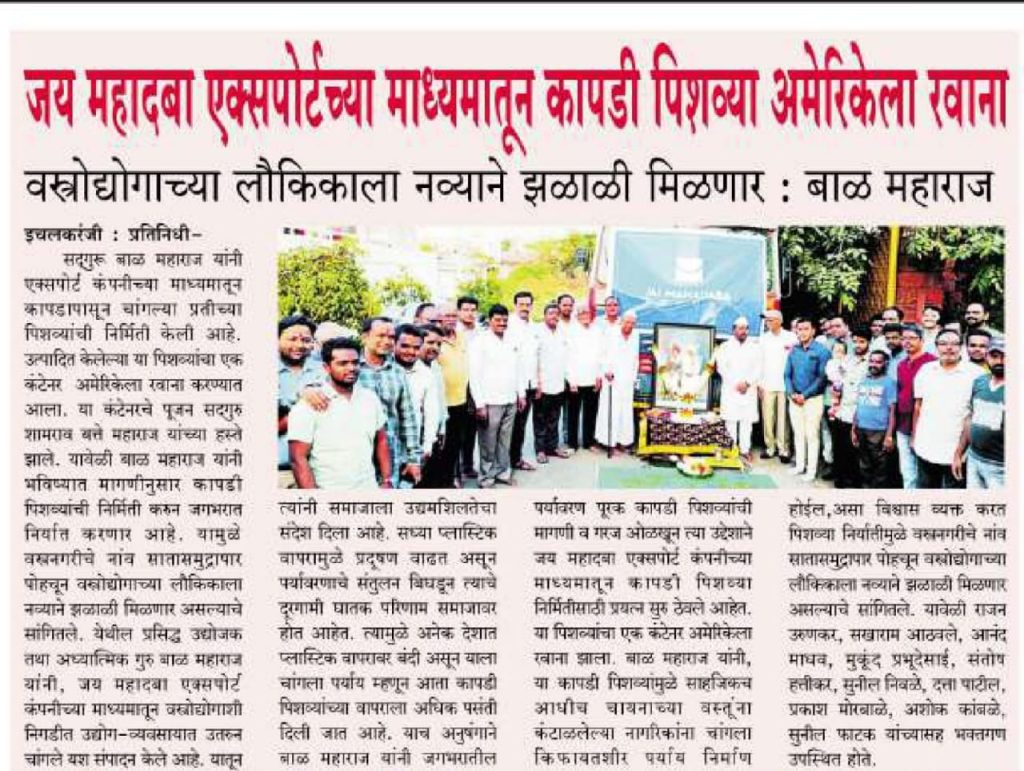
Jai Mahadaba Exports has achieved a significant milestone by successfully dispatching its first export shipment of eco-friendly cotton bags to the United States. The shipment marks the company’s entry into international markets while reinforcing its commitment to delivering sustainable, high-quality textile products from India.
The export container was ceremonially flagged off by Sadguru Bal Maharaj, who praised the initiative as an important step towards promoting environmentally responsible products and creating new opportunities for the textile industry in Ichalkaranji.
Based in Ichalkaranji, one of India’s most renowned textile manufacturing hubs, Jai Mahadaba Exports works closely with experienced local weaving and manufacturing units to produce premium reusable cotton bags that meet the quality expectations of international buyers. With growing global awareness of plastic pollution, reusable cloth bags have become a preferred alternative for retailers, businesses, and consumers seeking sustainable packaging solutions.
Speaking at the event, Sadguru Bal Maharaj commended Jai Mahadaba Exports for creating new opportunities for local manufacturers while showcasing the craftsmanship of Ichalkaranji on the global stage. He noted that initiatives like these not only generate employment but also encourage the production of environmentally friendly products that can successfully compete in international markets.
The company plans to expand its production capacity in line with increasing global demand while continuing to maintain high standards of quality, reliability, and sustainability. The successful dispatch of the first export container represents the beginning of Jai Mahadaba Exports’ long-term vision of supplying premium reusable cotton and canvas bags to customers across the world.
The flag-off ceremony was attended by members of the local textile community, business associates, well-wishers, and other distinguished guests, who extended their best wishes for the company’s continued success in global trade.
Editor’s Note: This article is an English adaptation of a Marathi newspaper report. It has been edited for clarity and readability while preserving the original facts and context.